17 Feb 2026
From Ancillary to Architect: The Structural Metamorphosis of Craftsman Automation
Share:


The Art of Seeing Behind Numbers: Decoding the Engineering DNA
Our journey with Craftsman Automation highlights a structural arbitrage often missed by the market. In March 2022, Craftsman Automation was pegged as a cyclical “CV proxy.” Today, it has emerged as a diversified “Industrial LEGO” set—a modular engineering platform pivoting from truck engines to hyperscale data centers. This report tracks the architectural shift from a vendor of parts to a provider of solutions, driven by a “compounding engine” of competencies
1. The “Street” Missed the Moat: Beyond the CV Label
The “Then” State (March 2022): The Perception Gap
In 2022, When We Initiated Coverage on Craftsman, the market viewed Craftsman Automation strictly as a beta play on the MHCV cycle. The data supported this view:
- Concentration Risk: Powertrain contributed 52% of revenue, with 61% dependent on MHCVs.
- Minor Aluminum Presence: Aluminum contributed just 21% of revenue with a capacity of 20,000 TPA, viewed as a junior partner.
- Valuation Ceiling: Rated as a cyclical auto-ancillary tethered to truck capex cycles.
The Hidden Moat: The “Machine-Building” DNA
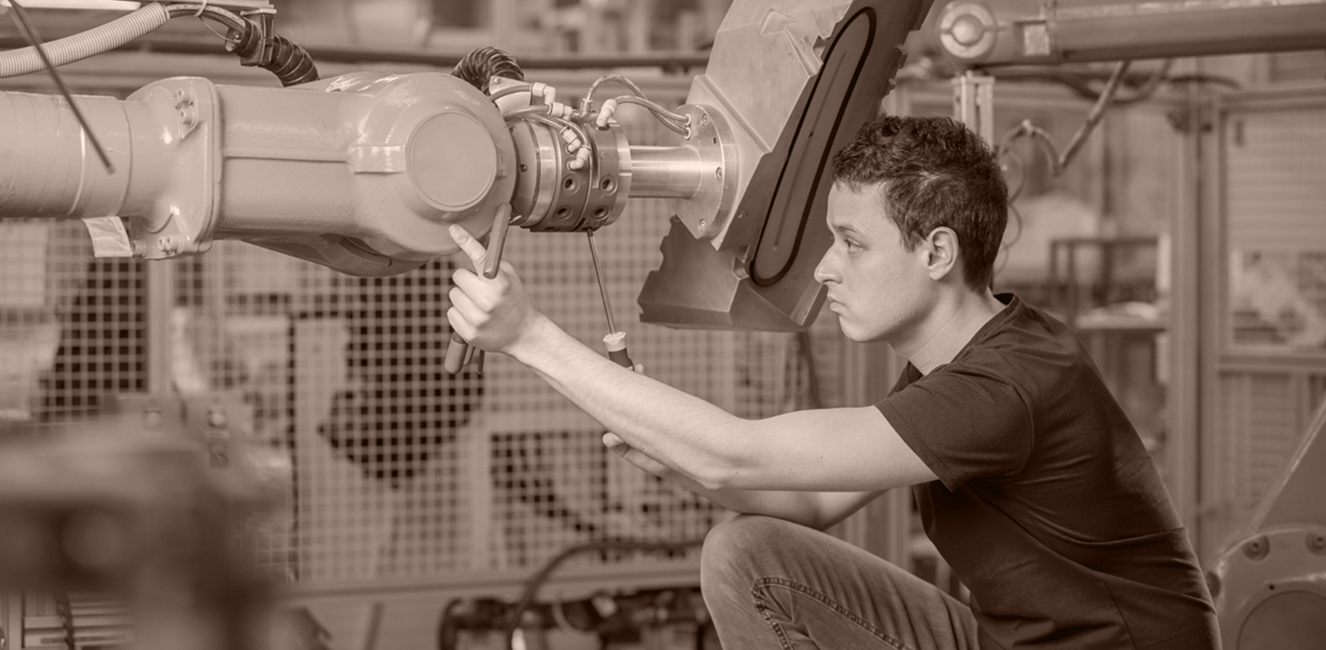
The true moat was invisible to the street: Process Engineering. Craftsman Automation doesn’t just run machines; it builds them. Its in-house Special Purpose Machine (SPM) division constructs equipment at a fraction of the cost of imported alternatives.
- Capital Efficiency: Lower capex equals higher Asset Turnover and ROCE.
- Agility: Rapid line reconfiguration allows Craftsman Automation to bid for complex jobs competitors find unviable. This “Process Moat” is the engine behind the massive capacity expansion discussed below.
2. The Aluminum Pivot: From Ancillary to Architect
The Strategic Imperative: Escaping the CV Cycle
To decouple from CV volatility, Craftsman Automation executed an aggressive expansion in Aluminum. Capacity exploded 9x in 7 years (11,000 TPA in FY18 to 100,000+ TPA in FY26) via organic growth and M&A.
The “Then vs. Now” Snapshot: Aluminum Segment
| Metric | Then (Mar 2022 / FY22) | Now (FY25/26) | The Pivot |
| Capacity | 20,000 TPA | ~100,000 TPA | 5x Growth from FY22 levels. |
| Revenue Mix | 21% of Consolidated Sales | 53% of Consolidated Sales | Now the dominant revenue engine. |
| EBIT Contribution | ~1% of Total EBIT (FY21) | 54% of Total EBIT | Primary profit driver. |
| Key Segments | 90% Two-Wheelers | Balanced: PVs, 2Ws, Structural | Massive entry into PVs via DR Axion. |
The Three Execution Pillars
- DR Axion (PV Entry): Acquired to crack the Passenger Vehicle code. Brought relationships with Hyundai/Kia/Mahindra and critical LPDC/GDC technology, creating a full-spectrum casting suite.
- Sunbeam (Turnaround Play): Acquired distressed asset Sunbeam (SLS). Through 50% headcount reduction and plant consolidation, Craftsman is driving margins from negative (65%) in FY24 to a target of 10% (FY26) at Sunbeam
- Alloy Wheels (Import Substitution): Greenfield plants in Bhiwadi and Hosur targeting Rs. 800 Crores revenue and 19% market share by FY27, leveraging the “China+1” shift.
3. The Powertrain Evolution: From Wheels to Watts
Reframing the “Sunset” Industry
While cars electrify, critical infrastructure relies on high-performance ICE. Craftsman Automation pivoted its Powertrain segment to target the Data Center Boom.
The Data Center Thesis: A $100 Million Opportunity
Hyperscale data centers require massive V12/V16/V20 backup generators.
- Fronberg Catalyst: Craftsman Automation acquired Fronberg (Germany) for its deep metallurgical expertise in large-engine casting.
- The Synergy: Combines German know-how with Indian cost structures (Kothavadi foundry).
- Visibility: Secured orders from 5 of the top 10 global majors. Targeting $100 million (Rs. 830 Cr) annual revenue from stationary engines by FY29.
The “Then vs. Now” Snapshot: Powertrain Segment
| Metric | Then (Mar 2022 / FY22) | Now (FY25/26 Estimates) | The Pivot |
| Primary Driver | Domestic MHCV Upcycle | Global Off-Highway & Data Centers | From cyclical domestic to structural global. |
| Revenue Potential | Dependent on Auto Vol | $100M/year from Stationary Engines | New revenue stream by FY29. |
4. Industrial & Engineering: The Tech Play
From Racking to Automation
Craftsman Automation shifted from commodity racking to Automated Storage and Retrieval Systems (ASRS).
- Market Position: Now the #1 player in India’s nascent ASRS market.
- Strategy: Selling full ecosystems (hardware + software) rather than just steel.
- Financial Impact: This shift to high-margin automation is driving a projected 50% CAGR in EBIT for the segment (FY25-28E).
5. The Financial Architecture: Data-Backed Transformation
The financials reflect a company exiting a heavy investment phase (“J-Curve”) and entering a harvest phase.
The Financial Journey: Estimates & Projections
| Metric | FY22 (Actual) | FY26E (Est) | FY28E (Est) | The Trajectory |
| Revenue | 2,217 Cr | 7,870 Cr | 8,882 Cr | 37% CAGR(FY22-26E) |
| EBITDA | 534 Cr | 1,178 Cr | 1,513 Cr | 20% CAGR (FY22-26E) |
| EBITDA % | 24.1% | 14.9% | 17.0% | Margin temporarily impacted by acquisitions of Sunbeam and Fronberg, recovery post-acquisitions by FY28e |
| PAT | 163 Cr | 352 Cr | 632 Cr | 21% CAGR (EPS Growth). |
Key Takeaways:
- Hyper-Growth Phase (The Top-Line Story)
Forget standard industrial growth rates. Craftsman is delivering a massive 37% Revenue CAGR (FY22-26E), essentially nearly 4x its size in just four years (Rs.2,217 Cr to Rs. 7,870 Cr). This aggressive scaling indicates robust market share gains and successful execution of its expansion strategy. - The “Smart” Margin Dip (Strategic Acquisitions)
The margin contraction in FY25/26 (to ~14.9%) isn’t a red flag—it’s the “investment price” for acquiring Sunbeam and Fronberg. These strategic buys are currently being integrated, and while they weigh on margins temporarily, they are adding critical capacity and capabilities that will serve as the engine for the next leg of growth. - Operating Leverage Kicks in (The Profit Pivot)
The real bullish story begins post-FY26. As the acquisitions stabilize, we see a massive efficiency payoff. By FY28E, EBITDA margins are projected to bounce back to 17.0%. More importantly, this margin expansion drives non-linear profit growth: PAT is set to nearly double again from FY26 to FY28 (Rs. 352 Cr to Rs. 632 Cr), signaling strong operating leverage. - Rapid Deleveraging (Balance Sheet Strength)
Despite peak investments in FY25 pushing Net Debt/EBITDA to ~2.7x, the company is projected to generate sufficient cash flow to deleverage swiftly, crashing back to a comfortable 1.0x by FY28E. This rapid cleanup proves the acquisitions are accretive and the business model remains cash-rich.
6. Final Thought: The Art of Seeing Behind Numbers
Craftsman Automation has successfully shed its skin as a CV-dependent machinist.
- Arbitrage the Time Horizon: The market fears the quarterly “FY25 dip”; the alpha lies in the “FY28 harvest.”
- Capability Trumps Category: CAL is not an auto ancillary; it is a High-Precision Engineering Architect capable of pivoting from trucks to data centers.
- Terminal Value: Conviction comes from valuing CAL’s entrenched future in secular trends: Lightweighting, Digital Infrastructure, and Automated Logistics.
Bottomline: The moat is visible. The pivot is complete. The flight continues.